Floor area vs land area: what is the difference?
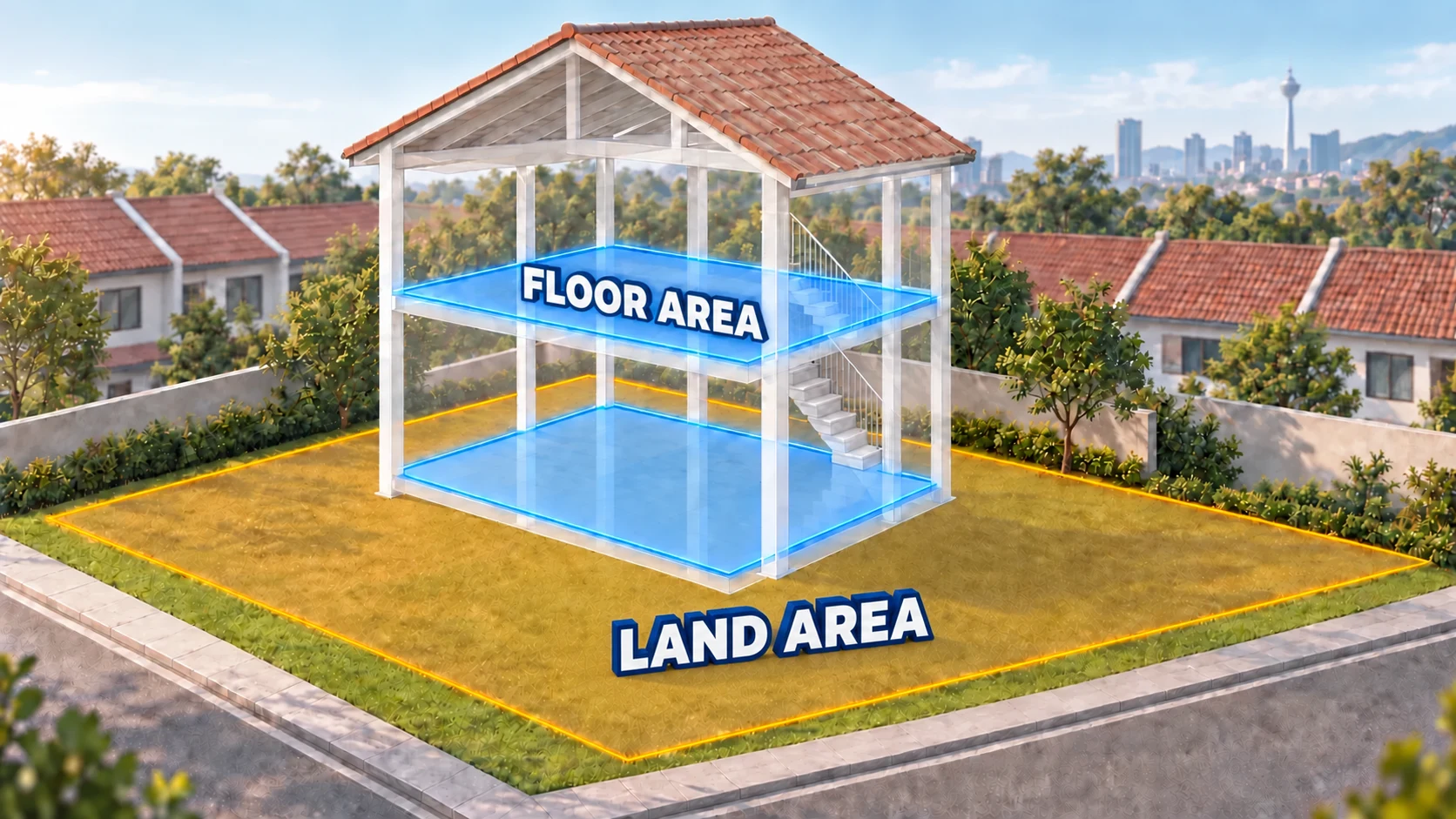
Floor area measures built space. Land area measures the parcel or lot.
The short answer
Floor area is the recorded built or unit size. Land area is the recorded lot or parcel size.
Both can appear on the same transaction because they answer different questions. Floor PSF divides the transaction price by the recorded floor area, while land PSF divides the same price by the recorded land area. You should compare floor PSF with floor PSF, and land PSF with land PSF.
If a transaction table shows one Size column, List.my uses an effective size to decide which recorded area should be used for comparison. This is needed because some property types are mainly recorded with floor area, while others are mainly recorded with land or parcel area. Using one effective size makes the table easier to filter, sort, and compare without mixing two different size bases in the same column. The transaction detail page can still show both floor area and land area when both fields are available.
When floor area is useful
Floor area is usually the better starting point for strata and unit-based properties, such as apartments, flats, SOHO units, offices, and shop units. It reflects the recorded space of the unit or built area, which is the size most buyers and renters think about when comparing similar units.
It can also matter for some multi-storey landed, shop, factory, or commercial properties where the building itself carries much of the value. For example, two shoplots on similar roads may have similar land sizes, but one may have more usable built space across floors.
When land area matters
Land area matters most when the lot itself is an important part of the property value. This is common for landed homes, detached houses, factories, warehouses, and other properties where frontage, shape, access, and land scarcity can affect how people compare transactions.
A two-storey terrace house can have a land area that is smaller than its built-up area, while a detached house can have a large land area even if the building is modest. In both cases, the two area fields are not competing measurements. They describe different parts of the same property.
Why the PSF can be different
The same transaction price can produce two different PSF figures because the denominator changes. If the recorded floor area is larger than the land area, the floor PSF will usually look lower. If the recorded land area is larger than the floor area, the land PSF will usually look lower.
That does not mean one figure is wrong. It means you need to choose the PSF basis that matches the property type and the comparison you are trying to make.
How big is a 1,000 sqft condo?
If a listing uses m², acres or hectares, our guide to area units shows how they compare with square feet.
Sizes in listings and transaction records are easier to judge with some reference points. These are common ranges in Malaysian projects, not rules — layouts vary by project and era.
| Recorded size | What it commonly is |
|---|---|
| 450 – 650 sqft | Studio or one-bedroom unit |
| 700 – 900 sqft | Compact two- or three-bedroom unit |
| 1,000 – 1,200 sqft | Standard three-bedroom family unit |
| 1,400 sqft + | Large three- or four-bedroom unit, dual-key, or duplex |
For landed homes, a common intermediate terrace lot is around 20 × 70 feet, which is 1,400 sqft of land area — while its built-up floor area across two storeys can be larger than the lot itself.
These reference points also explain why size filters matter. An 800 sqft unit and a 1,500 sqft unit in the same project serve different buyers and trade at different PSF levels, so when you browse recorded transactions, narrow to the size band you actually want before comparing prices.
How to compare transactions
Start with the same area basis, then narrow the comparison by location, property type, transaction date, and size where possible. A condo unit should usually be compared against similar unit sizes in the same project or nearby projects, while a landed house may need closer attention to land size, frontage, renovation, and whether it is intermediate, end lot, corner, or detached.
List.my may group area transactions by similar effective size because PSF is easier to compare within the same size range. Smaller properties often show a higher PSF than larger properties, so avoid comparing very different sizes too casually. See how List.my chooses transaction size for more detail.
Common questions
What is the difference between floor area and land area?
Floor area is the recorded built or unit size, while land area is the recorded lot or parcel size. Both can appear on the same transaction because they measure different things, and each produces a different price per square foot.
How big is a 1,000 sqft condo?
In Malaysia, around 1,000 to 1,200 sqft is a common size for a standard three-bedroom condominium unit. Compact two- or three-bedroom units often sit around 700 to 900 sqft, while studios and one-bedroom units are commonly 450 to 650 sqft.
Is built-up area the same as floor area?
In everyday use, built-up usually refers to the built space of the property, which is what the recorded floor area measures. The recorded figure in transaction data may differ slightly from a developer's marketing figure, so compare recorded sizes with recorded sizes.
Why does a smaller unit show a higher price per square foot?
Smaller properties often transact at a higher PSF than larger ones in the same project, because the fixed value of location and facilities spreads across fewer square feet. This is why PSF comparisons work best within a similar size range.
Help improve this guide
Spot a mistake or have a clearer example? Send us a correction or start a community discussion so the guide can improve over time.